Brain Evolution & Myofascial Correspondence

From Smooth Brains to Complex Cortices: How Peripheral Myofascial Nerve Networks Sculpt Cortical Folding Patterns Through 66 Million Years of Mammalian Evolution

Core Thesis

Peripheral myofascial nerve connection complexity directly corresponds to cortical folding complexity, with peripheral myofascia serving as intersections between body fascia groups and brain folds serving as intersections of their corresponding brain regions.

Challenging the Current Paradigm: Current neuroscience explains cortical folding through mechanical tension during development - where the outer cortical layer grows faster than the underlying white matter, creating physical tension that causes the brain surface to buckle and fold into gyri and sulci. This thesis proposes that this developmental mechanical tension is not random, but is itself precisely guided by the peripheral myofascial nerve network architecture.

The Direct Correspondence: Each peripheral myofascial intersection - where fascial planes converge and create complex proprioceptive nerve networks - has a corresponding cortical fold intersection where multiple brain regions converge. The complexity of nerve connections at peripheral myofascial junctions directly determines the depth and complexity of the corresponding cortical sulci and gyri. This creates a precise anatomical mapping between body and brain architecture.

The Revolutionary Insight: The mechanical tension that physically sculpts cortical folds during brain development is directed by the peripheral myofascial nerve network. Each gyrus and sulcus represents not just additional surface area, but the brain's architectural adaptation to process and integrate with specific myofascial intersection points. The brain's folding pattern is literally a neural map of the body's fascial intersection complexity - making cortical folding the central nervous system's mirror of the peripheral tensegrity network.

1

Early Mammals (Rodentia)

Representative: Rat • Present Day
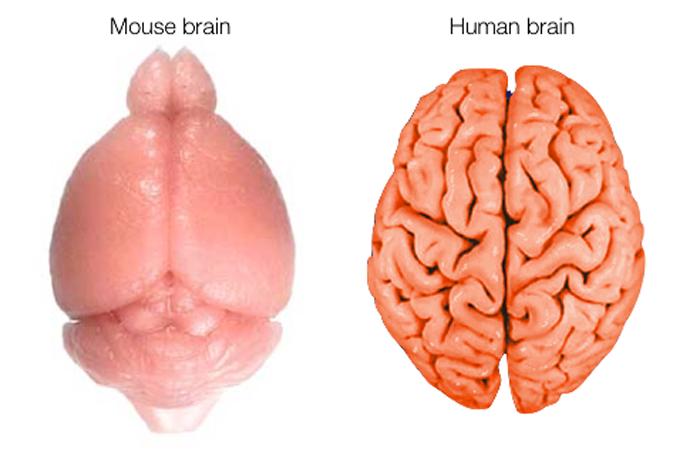
Rat brain showing smooth lissencephalic structure
Rat Brain: Completely Smooth (Lissencephalic)
FOLDING LEVEL: 0% - No Gyri or Sulci

Movement Complexity Profile

  • Locomotion: Quadrupedal scurrying in 2D plane with low center of gravity
  • Manipulation: Basic paw use for holding food, no fine motor control
  • Behavioral Repertoire: Instinctual, repetitive patterns for survival tasks

Brain Structure

  • Small brain with almost no gyrification
  • Represents baseline mammalian brain structure
  • Minimal cortical surface area
Folding-Movement Justification: The rat's completely smooth brain surface directly reflects its simple, 2D movement patterns. With locomotion limited to basic quadrupedal scurrying and minimal manipulative abilities, the myofascial system generates only basic proprioceptive feedback. This simple "language of motion" requires minimal cortical processing power - hence no evolutionary pressure for surface area expansion through folding. The smooth cortex is perfectly matched to control simple, repetitive motor patterns with limited whole-body coordination demands.
2

Lagomorpha

Representative: Rabbit • Present Day
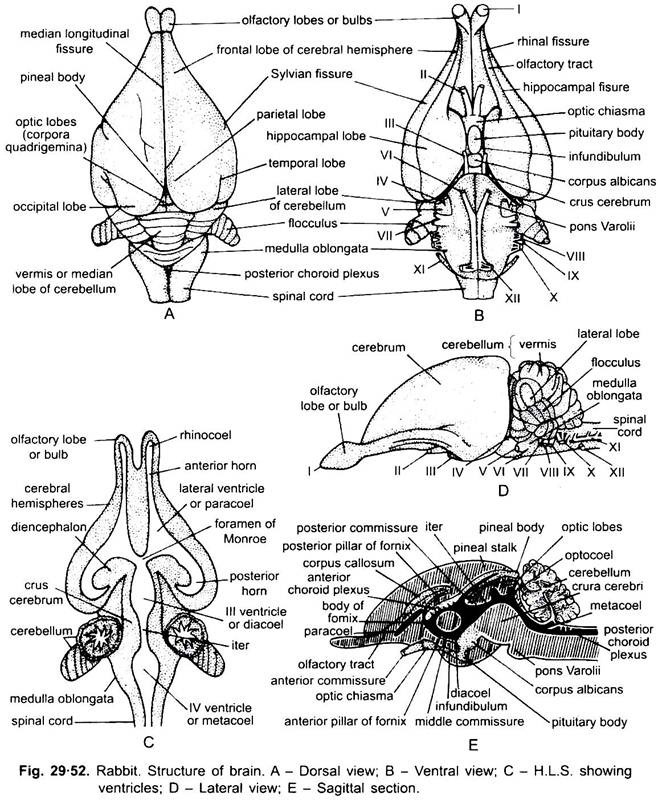
Rabbit brain showing slight folding development
Rabbit Brain: Minimal Folding (Mostly Lissencephalic)
FOLDING LEVEL: 10% - Very Few Shallow Sulci

Movement Complexity Profile

  • Locomotion: Explosive hopping and bounding requiring whole-body coordination
  • Evasive Maneuvers: Rapid, unpredictable directional changes to evade predators
  • Shock Absorption: Complex myofascial system for landing impacts

Brain Structure

  • Mostly smooth but with beginning of slight indentations
  • Enhanced cerebellum for coordination
  • Step up from basic rodent structure
Folding-Movement Justification: The rabbit's minimal cortical folding (only shallow sulci) corresponds to its introduction of explosive, whole-body movement patterns. The powerful hopping locomotion requires significantly more myofascial coordination than simple scurrying - the hindlimbs must generate explosive force while the entire fascial system absorbs landing impacts. This increased complexity in the "language of motion" creates the first evolutionary pressure for cortical surface area expansion, resulting in the earliest, shallow folds that mark the transition from completely smooth to gyrencephalic brains.
3

Carnivora

Representative: Cat • Present Day
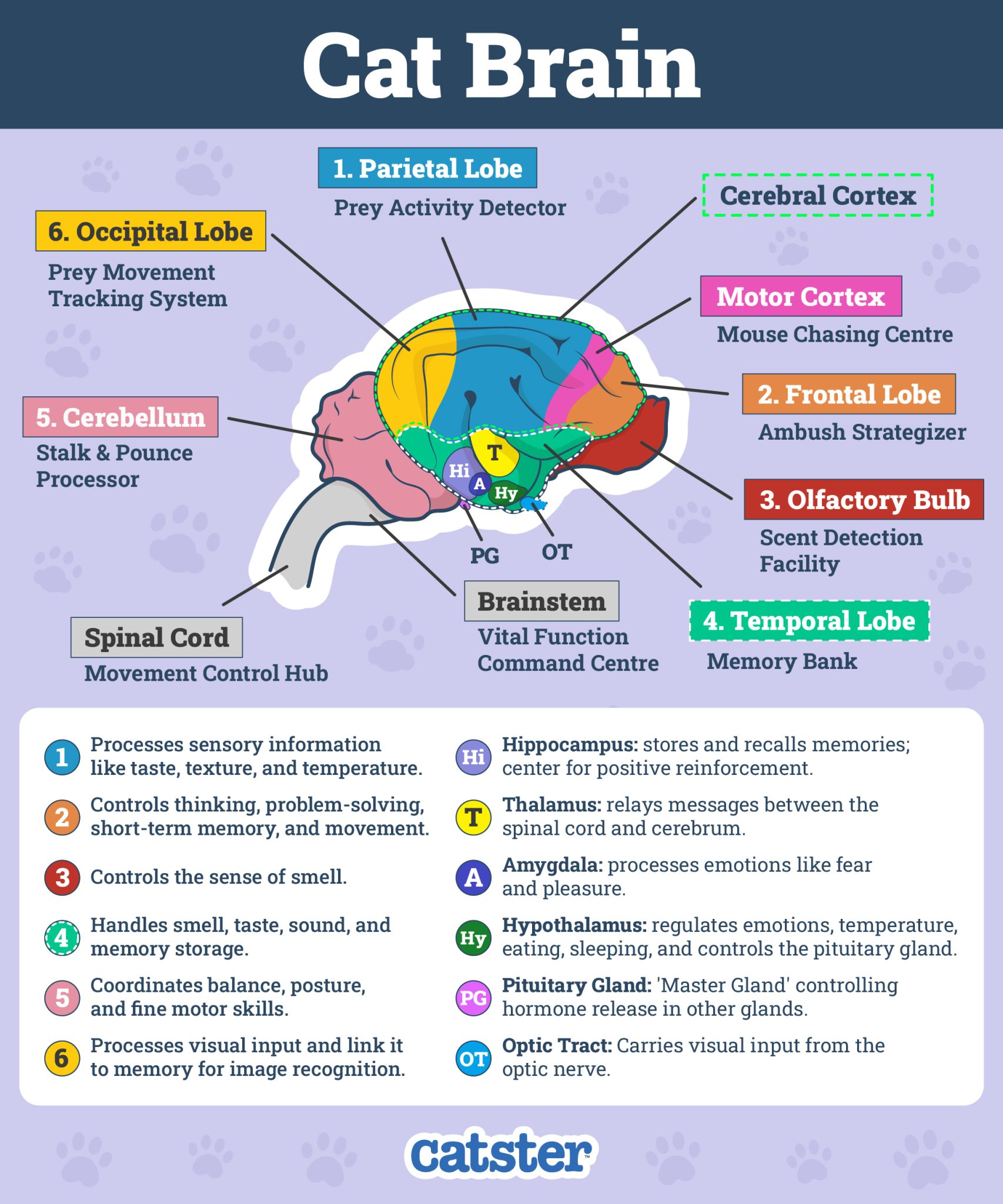
Cat brain showing clear gyrencephalic folding
Cat Brain: Moderate Folding (Gyrencephalic)
FOLDING LEVEL: 40% - Clear Gyri and Sulci

Movement Complexity Profile

  • Predatory Dynamics: Stalking, sprinting, leaping, climbing, mid-air body twisting
  • Sensorimotor Integration: Rapid processing of visual, auditory, and proprioceptive data
  • Fine Control: Delicate paw manipulation for prey handling

Brain Structure

  • Numerous distinct gyri and sulci
  • Significant leap in cortical surface area
  • Enhanced motor and sensory processing regions
Folding-Movement Justification: The cat's moderate cortical folding (40% surface area increase) directly enables its mastery of 3D predatory movement. The distinct gyri and sulci provide the computational power needed to process the complex proprioceptive feedback from stalking, pouncing, climbing, and the famous mid-air body twisting. Each fold represents additional neural real estate for integrating visual tracking with whole-body coordination through the myofascial system. The brain's folded architecture is perfectly matched to control a body capable of explosive, multi-planar, predictive movements that define successful predation.
4

Perissodactyla

Representative: Horse • Present Day
Horse brain showing high gyrencephalic folding
Horse Brain: High Folding (Highly Gyrencephalic)
FOLDING LEVEL: 60% - Dense Gyri and Deep Sulci

Movement Complexity Profile

  • Specialized Locomotion: High-speed, rhythmic movement over varied terrain
  • Biomechanical Complexity: Shock absorption and energy storage through fascial systems
  • Herd Dynamics: Coordinated group movement requiring social motor integration

Brain Structure

  • Large and densely folded brain
  • More complex than carnivore brains
  • Specialized for rhythmic motor control
Folding-Movement Justification: The horse's highly folded brain (60% surface area increase) reflects its specialization in high-speed, rhythmic locomotion requiring immense biomechanical coordination. The dense gyri and deep sulci provide the neural architecture needed to manage the complex myofascial system that stores and releases elastic energy during galloping. Each fold represents computational power for processing proprioceptive feedback from the suspensory apparatus, coordinating four-limb timing, and maintaining balance at speed. The brain's folded structure is perfectly adapted to control a body that functions as a sophisticated biological spring system for efficient, powerful locomotion.
5

Cetacea

Representative: Dolphin • Present Day
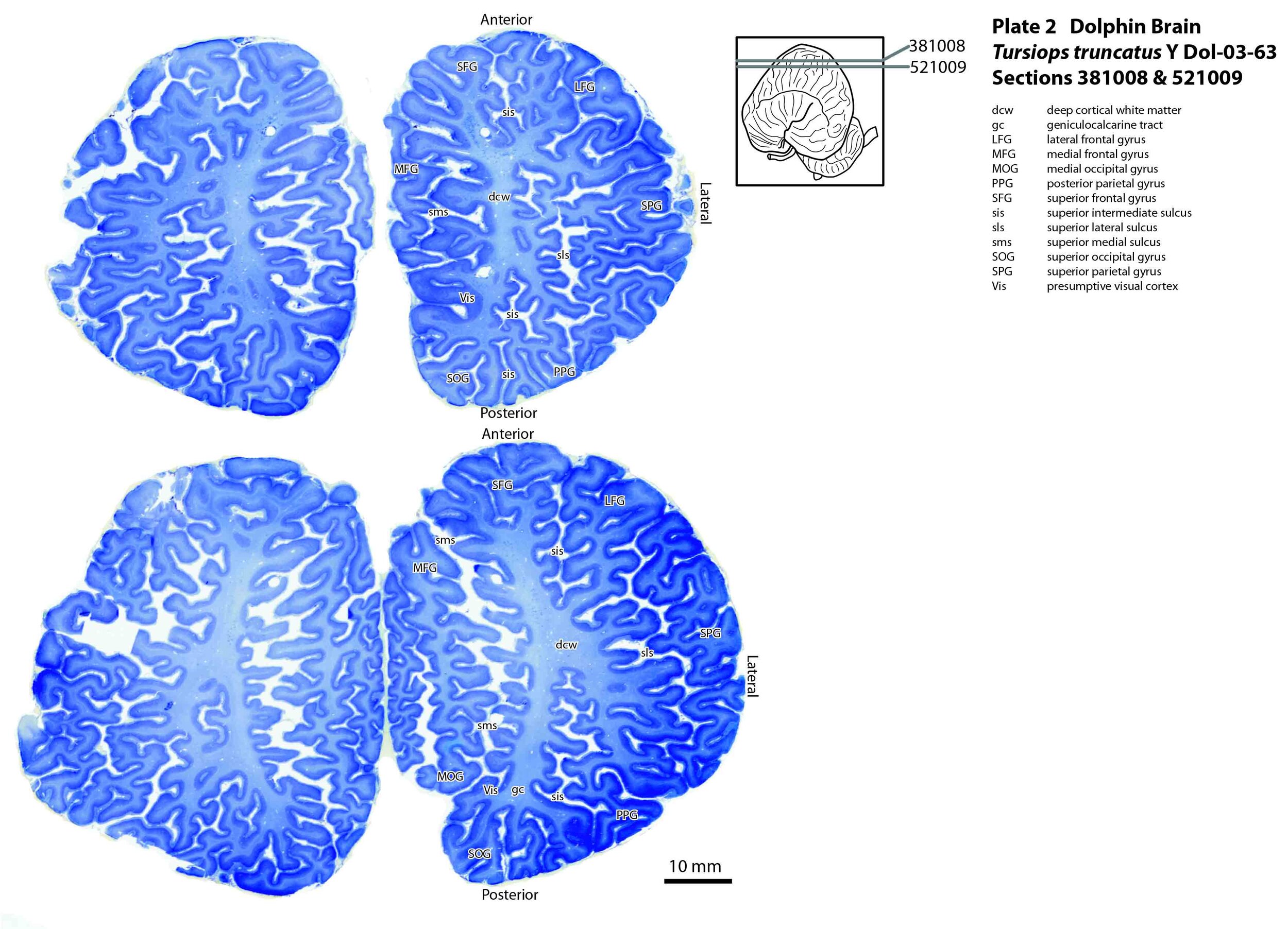
Dolphin brain showing extreme gyrencephalic folding
Dolphin Brain: Extreme Folding (Hyper-Gyrencephalic)
FOLDING LEVEL: 85% - Extremely Dense Folding

Movement Complexity Profile

  • Six Degrees of Freedom: Movement and rotation on all three axes in 3D fluid environment
  • Echolocation: Real-time sound emission, echo processing, and spatial navigation
  • Hydrodynamics: Precise control of flukes and flippers for graceful maneuvering

Brain Structure

  • One of the most convoluted brains in nature
  • Surface area rivals and sometimes exceeds humans
  • Extreme gyrification for 3D navigation
Folding-Movement Justification: The dolphin's extreme cortical folding (85% surface area increase) represents the pinnacle of movement-brain co-evolution. The hyper-dense folding provides the massive computational power needed for 6-degrees-of-freedom movement in a 3D fluid environment. Each fold processes the incredibly complex proprioceptive data from echolocation-guided navigation, where the entire body becomes both a sound transmitter and receiver. The myofascial system must coordinate precise fluke movements for hydrodynamic efficiency while the brain simultaneously processes acoustic spatial maps. This represents the most complex "language of motion" in nature, requiring the most extensively folded brain architecture.
6

Early Primates

Representative: Purgatorius • ~66 MYA
Early primate brain showing initial folding
Early Primate Brain: Beginning Folding
FOLDING LEVEL: 20% - Initial Gyri Development

Movement Complexity Profile

  • Arboreal Locomotion: Generalized arboreal quadruped with grasping hands and feet
  • 3D Navigation: Basic navigation in branch-filled environment
  • Distance Judgment: Leaping between branches requiring spatial assessment

Brain Structure

  • Small, relatively lissencephalic brain
  • Notable expansion in visual processing areas
  • Enhanced compared to ground-dwelling contemporaries
Evolutionary Justification: The initial move into trees was the first key driver. The need to judge distances for leaping, navigate complex 3D space, and coordinate grasping hands and feet created the first significant evolutionary pressure for a more sophisticated brain, particularly in visual processing centers.
7

Early Apes

Representative: Proconsul • ~22-20 MYA
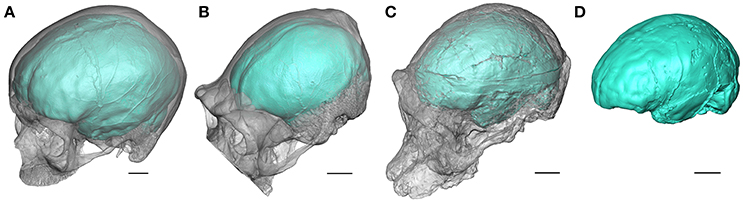
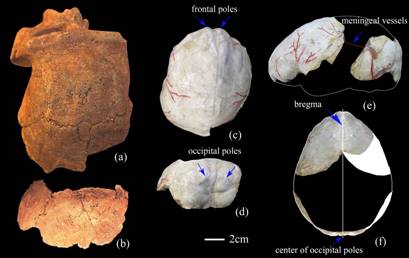
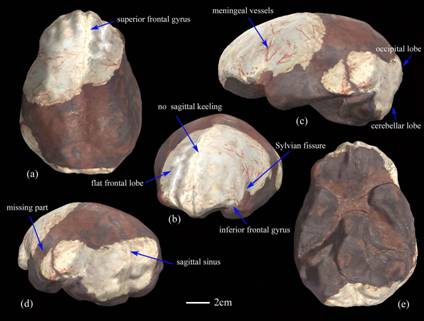
Proconsul brain endocast
Increased gyrification with prominent visual cortex
Movement Complexity:

Movement Complexity Profile

  • Enhanced Flexibility: Increased mobility in shoulder, elbow, and wrist joints
  • Varied Arboreal Movement: More climbing, clambering, and reaching than predecessors
  • Generalized Arborealism: Not specialized swingers but more flexible than early primates

Brain Structure

  • Larger brains with clear increase in gyrification
  • Prominent visual cortex development
  • Enhanced frontal and parietal lobes
Evolutionary Justification: The increased flexibility in limbs meant the brain had to manage a wider range of potential movements. It processed more complex proprioceptive feedback from mobile joints and created more nuanced motor plans for canopy navigation. This increased computational demand drove the first significant wave of cortical folding in our lineage.
8

Great Apes

Representative: Pierolapithecus • ~20-15 MYA
Great ape brain showing increased folding
Great Ape Brain: Increased Folding
FOLDING LEVEL: 35% - Developing Gyri and Sulci

Movement Complexity Profile

  • Knuckle-Walking: Development of specialized terrestrial locomotion
  • Dual-Mode Locomotion: Proficiency in both arboreal and terrestrial environments
  • Tool Use: Basic tool use for food processing and insect probing

Brain Structure

  • More complex motor cortex
  • Significantly larger cerebellum
  • Enhanced coordination centers
Folding-Movement Justification: The great ape's increased cortical folding (35% surface area increase) reflects the addition of knuckle-walking to their movement repertoire. This dual-mode locomotion - both arboreal and terrestrial - requires the brain to manage two completely different myofascial coordination patterns. The developing gyri and sulci provide the neural architecture needed to switch between tree-climbing (requiring grasping and balance) and ground-based knuckle-walking (requiring specialized wrist mechanics and weight distribution). The brain's folding directly corresponds to this expanded "language of motion" that includes both vertical and horizontal movement mastery.
9

Early Hominins

Representative: Ardipithecus ramidus • ~8-4 MYA
Early hominin brain showing bipedal adaptations
Early Hominin Brain: Bipedal Reorganization
FOLDING LEVEL: 25% - Reorganized Structure

Movement Complexity Profile

  • Facultative Bipedalism: Could walk upright but retained climbing adaptations
  • Dual-Mode Existence: Managing both bipedal and arboreal locomotion
  • Balance Challenge: Constant adjustment required for unstable bipedal stance

Brain Structure

  • Brain size similar to chimpanzees (350-400cc)
  • Forward-positioned foramen magnum
  • Reorganized brain base and cerebellum
Folding-Movement Justification: The early hominin brain shows critical reorganization rather than just size increase. The challenge of facultative bipedalism - managing both upright walking and tree climbing - created unprecedented demands on the myofascial system. The brain had to process completely different proprioceptive feedback patterns: the unstable, dynamic balance of bipedalism versus the secure, grasping stability of arboreal movement. This dual-mode existence required internal brain reorganization and the beginning of specialized folding patterns to handle the most complex postural challenge in mammalian evolution - controlling a body transitioning between two fundamentally different movement paradigms.
10

Australopithecines

Representative: Australopithecus afarensis • ~4.2-2.1 MYA
Australopithecine brain showing parietal expansion
Australopithecine Brain: Parietal Expansion
FOLDING LEVEL: 45% - Expanding Parietal Lobes

Movement Complexity Profile

  • Committed Bipedalism: Lost grasping foot, dedicated to upright walking
  • Efficient Locomotion: Perfected bipedal gait for long-distance travel
  • Retained Climbing: Long arms and curved fingers for occasional arboreal activity

Brain Structure

  • Increased brain size (400-550cc)
  • Backward shift of lunate sulcus
  • Expanding parietal cortex for spatial integration
Folding-Movement Justification: The australopithecine brain's increased folding (45% surface area increase) with specific parietal lobe expansion directly reflects the mastery of committed bipedalism. The expanding parietal cortex, evidenced by the backward shift of the lunate sulcus, provides the neural architecture for integrating the complex proprioceptive feedback required for efficient upright locomotion. Each new fold represents additional processing power for the sophisticated "body mapping" needed to maintain balance, coordinate stride mechanics, and navigate varied terrain on two legs. The brain's folding pattern is literally sculpted by the demands of controlling a fully bipedal myofascial system.
11

Homo habilis

"Handy Man" • ~2.4 MYA
Homo habilis brain showing Broca's expansion
Homo habilis Brain: Tool-Making Architecture
FOLDING LEVEL: 55% - Broca's Area Expansion

Movement Complexity Profile

  • Systematic Tool Making: Creation of Oldowan stone tools requiring precise motor planning
  • Hand-Eye Coordination: Striking stones at exact angles and force
  • Sequential Planning: Multi-step processes from material selection to tool completion

Brain Structure

  • Significant jump in brain size (550-700cc)
  • First clear evidence of expanded Broca's area
  • Enhanced motor planning regions
Folding-Movement Justification: The Homo habilis brain's dramatic folding increase (55% surface area increase) with specific Broca's area expansion represents the first brain architecture designed for abstract motor sequencing. The systematic creation of Oldowan tools required a revolutionary new "language of motion" - the ability to plan and execute precise, multi-step hand movements guided by a mental template. The expanded Broca's area, fundamentally a region for complex motor planning and sequencing, provides the neural substrate for this unprecedented level of fine motor control. Each fold represents the brain's adaptation to control hands capable of transforming raw materials into purposeful tools through deliberate, sequenced actions.
12

Homo erectus

"Upright Man" • ~1.9 MYA - 143,000 years ago
Homo erectus brain showing major expansion
Homo erectus Brain: Major Expansion
FOLDING LEVEL: 70% - Frontal & Parietal Growth

Movement Complexity Profile

  • Long-Distance Migration: First hominin to leave Africa, expert endurance locomotion
  • Advanced Tool Technology: Acheulean hand-axes requiring complex mental templates
  • Cooperative Hunting: Group coordination for large game hunting
  • Fire Control: Complex motor sequences for fire management

Brain Structure

  • Major leap in brain size (800-1200cc)
  • Significant expansion in frontal and parietal lobes
  • More modern-looking, highly folded structure
Folding-Movement Justification: The Homo erectus brain's extensive folding (70% surface area increase) reflects the integration of endurance locomotion with advanced tool technology and social coordination. The massive expansion in frontal and parietal lobes provides the neural architecture for managing the most complex "language of motion" yet evolved: long-distance migration requiring sustained rhythmic movement, cooperative hunting demanding group motor coordination, and advanced Acheulean tool-making requiring sophisticated hand-eye integration. Each fold represents computational power for processing the rich myofascial feedback from bodies capable of both marathon endurance and precise manipulation - the first truly modern movement repertoire.
13

Archaic Humans

Neanderthals & Denisovans • ~400,000-40,000 years ago
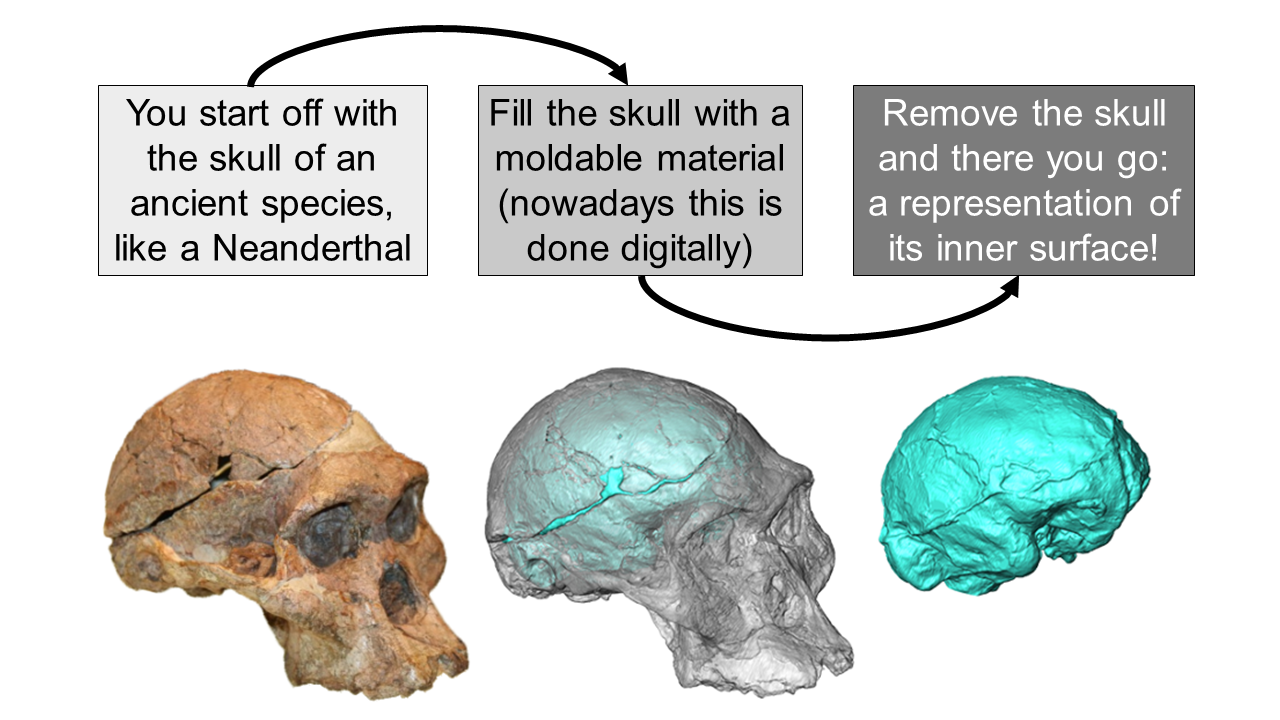
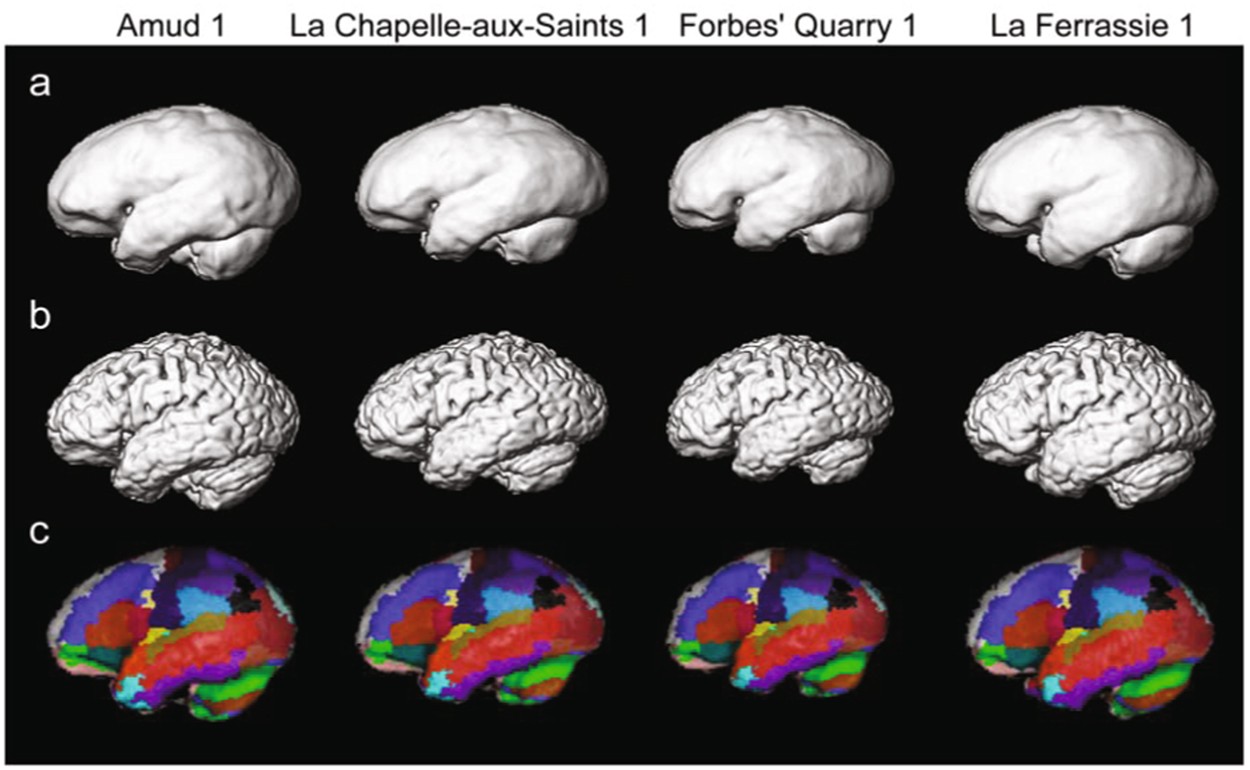
Neanderthal brain showing peak size
Neanderthal Brain: Peak Size & Folding
FOLDING LEVEL: 80% - Maximum Brain Size

Movement Complexity Profile

  • Expert Hunting: Sophisticated toolkits for large game hunting in harsh environments
  • Complex Manufacturing: Mousterian tools, wooden spears, tailored clothing
  • Symbolic Behavior: Use of pigments, burial practices, abstract motor actions
  • Environmental Adaptation: Survival in Ice Age conditions requiring complex motor skills

Brain Structure

  • Brain size reached modern peak (1200-1750cc)
  • Highly gyrified with large frontal, parietal, and occipital lobes
  • Neanderthals had larger brains than modern humans on average
Folding-Movement Justification: The Neanderthal brain's peak folding (80% surface area increase) represents the maximum expression of movement-brain co-evolution. The massive, highly gyrified structure provided the computational power for the most demanding "language of motion" in harsh Ice Age environments: expert large-game hunting requiring precise spear-thrusting and coordinated group tactics, sophisticated tool manufacturing including hafted weapons and tailored clothing, and symbolic behaviors requiring fine motor control for pigment use and burial practices. Each fold represents neural architecture for controlling bodies capable of surviving in the most challenging environments through complex, culturally-transmitted movement skills.
14

Homo sapiens

"Wise Man" • ~300,000 years ago - Present
Modern human brain showing unique organization
Human Brain: Optimized Folding Architecture
FOLDING LEVEL: 90% - Maximum Efficiency

Movement Complexity Profile

  • Projectile Technology: Spear-throwers, bows requiring incredible motor skill and physics intuition
  • Art and Music: Cave paintings, beads, instruments representing pinnacle of fine motor control
  • Language: Most complex motor sequencing task - coordinating dozens of muscles for infinite meaningful utterances
  • Abstract Planning: Ability to invent and perfect entirely novel movement sequences

Brain Structure

  • Unique globular shape with enhanced connectivity
  • Larger parietal and cerebellar regions
  • Extreme gyrification for maximum processing power
Folding-Movement Justification: The modern human brain's optimized folding (90% efficiency) represents the ultimate refinement of the movement-brain relationship. Our unique globular shape and extreme gyrification provide the neural architecture for the most sophisticated "language of motion" ever evolved: projectile technology requiring physics intuition and precise timing, artistic creation demanding unprecedented fine motor control, and spoken language - the most complex motor sequencing task in nature, coordinating dozens of muscles for infinite meaningful expressions. Each fold represents the culmination of 66 million years of co-evolution between the peripheral myofascial system and central processing power, creating a brain literally sculpted by the demands of controlling the most versatile movement repertoire on Earth.